Mentorship
I’ve had the honor of working with some excellent students from Cornell and beyond — here are some of their projects! If you are an undergraduate student interested in using mathematics and computer science for wildlife conservation, please don’t hesitate to reach out.
-
Naveen Dhar
High Tech High Mesa, San Diego, CA, 2025–2026
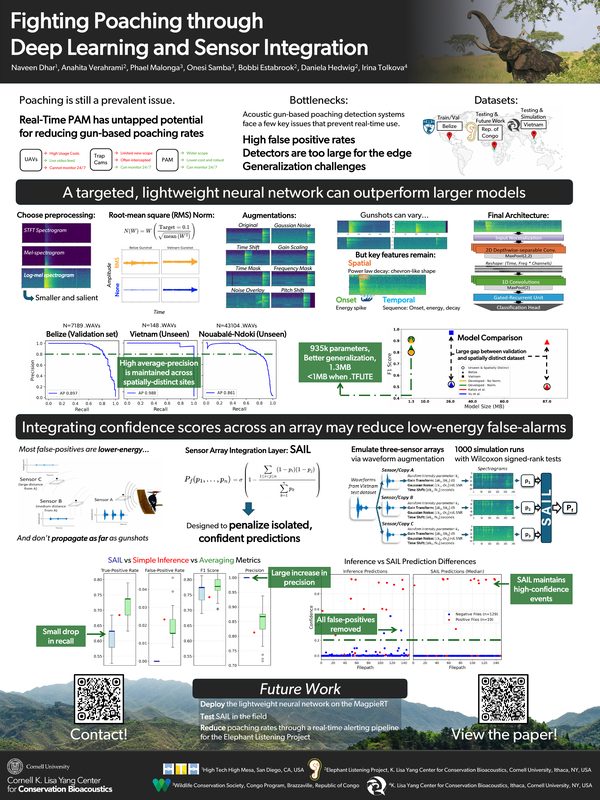
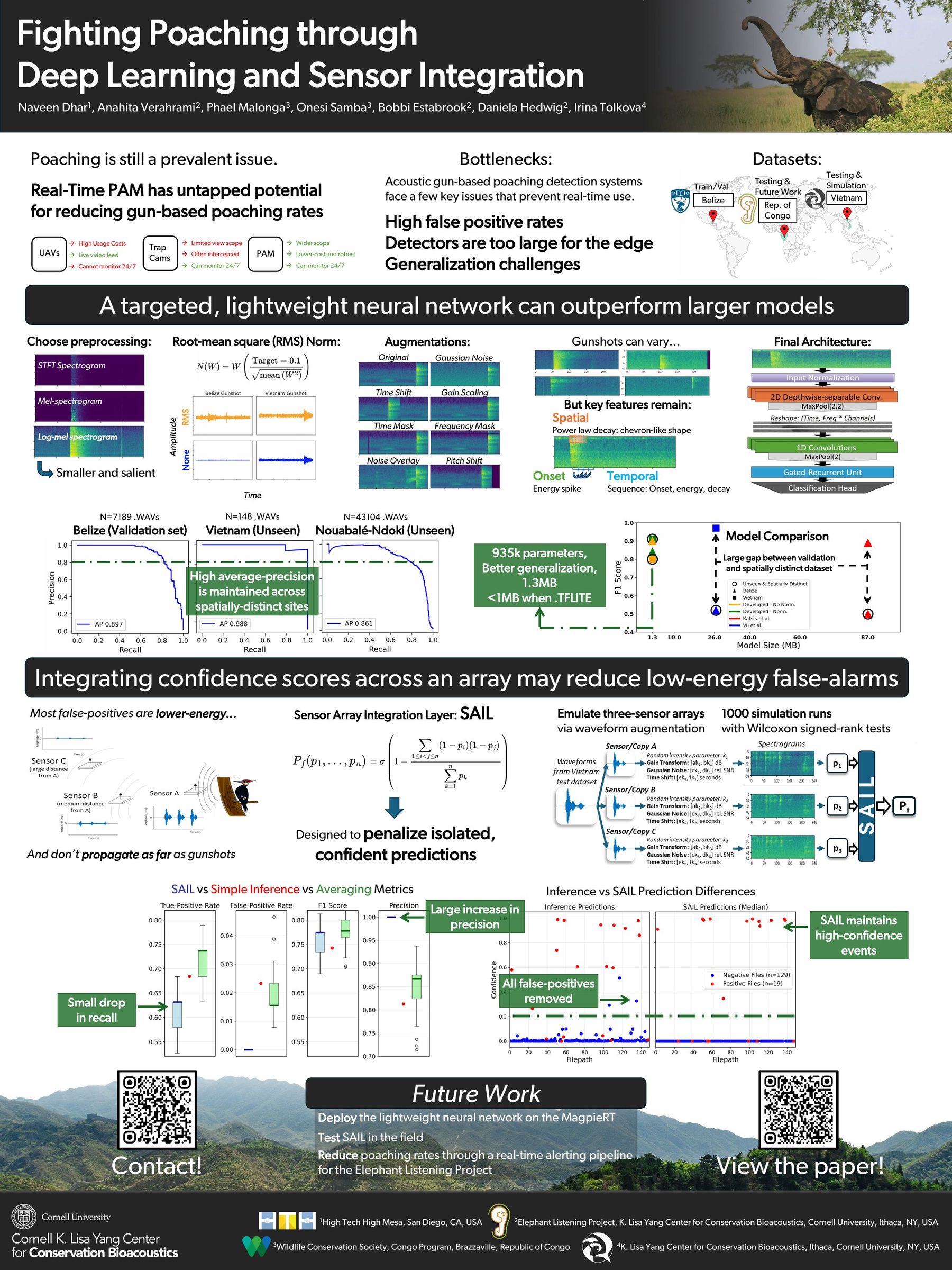
Fighting poaching through deep learning and sensor integration
Independent research focused on gunshot detection in rainforest environments; manifested in an oral presentation at ASA (Dec 2025), published conference paper at NeurIPS Workshop on Animal Communication (Dec 2025), press release, and podcast appearance on Scientific American’s Science Quickly.
-
Akashram, Rucha Parekh, Arham Bafna
Dwarkadas J. Sanghvi College of Engineering, India, 2025–2026
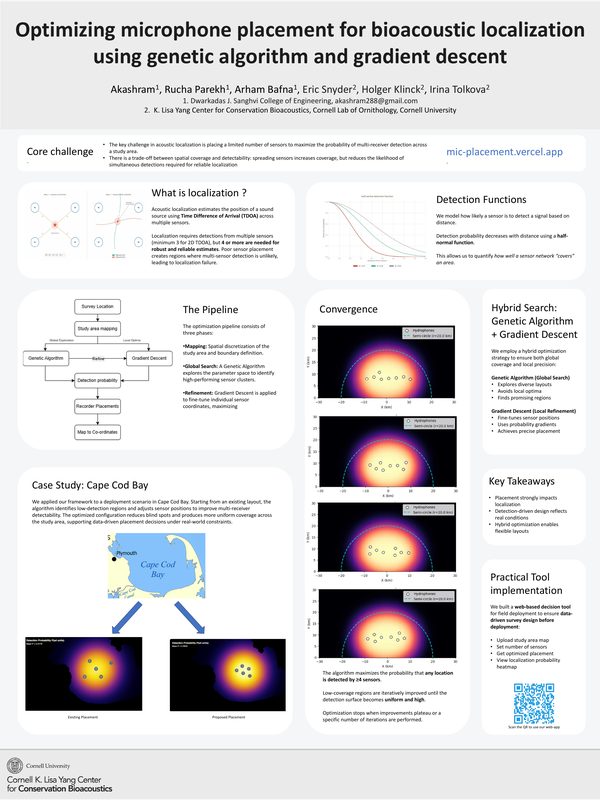
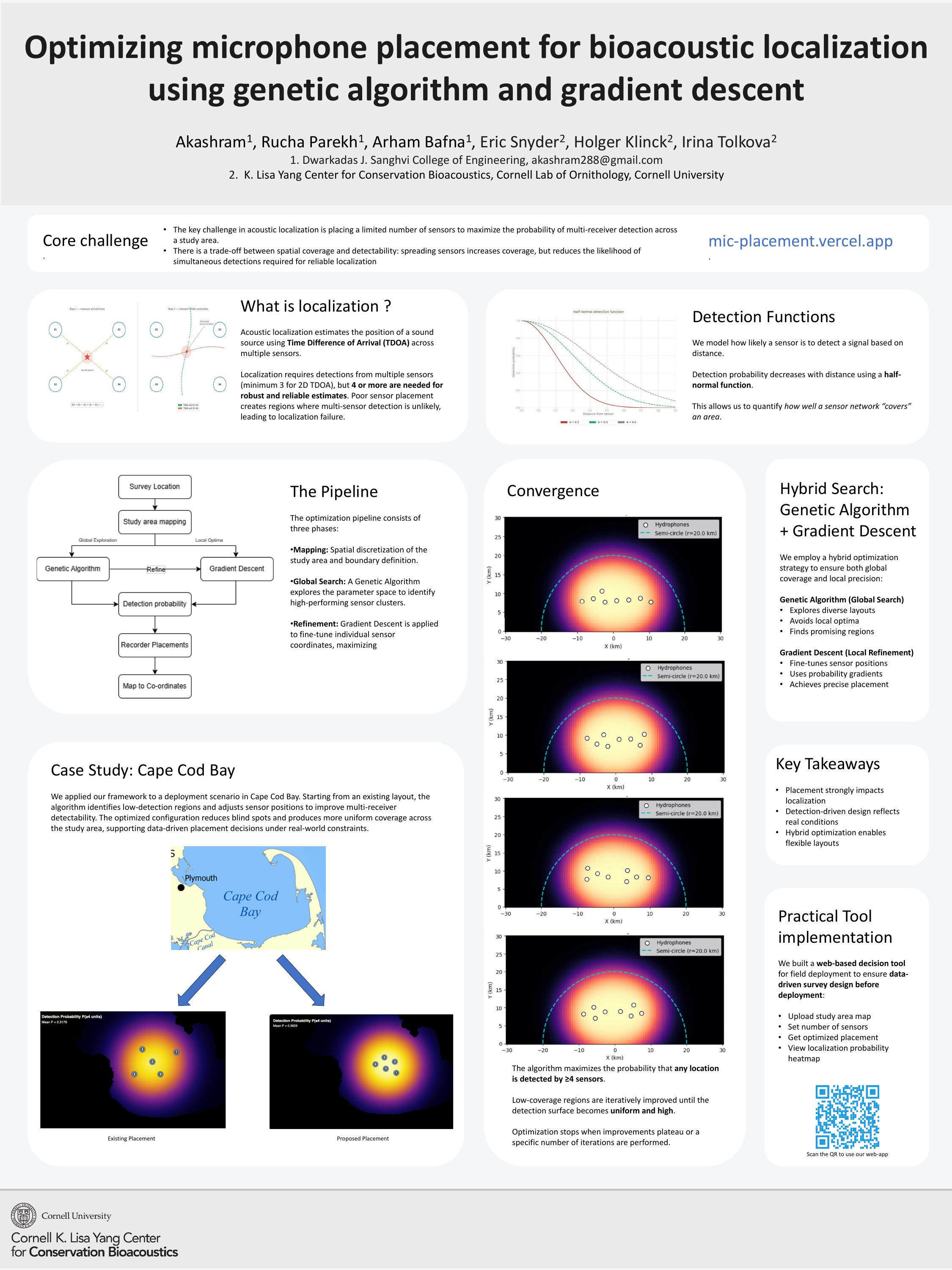
Optimizing microphone placement for bioacoustic localization using genetic algorithms and gradient descent
Together with Akashram, this computer science capstone group project focused on array optimization for bioacoustic localization.
-
Akashram
Dwarkadas J. Sanghvi College of Engineering, India, 2025–2026
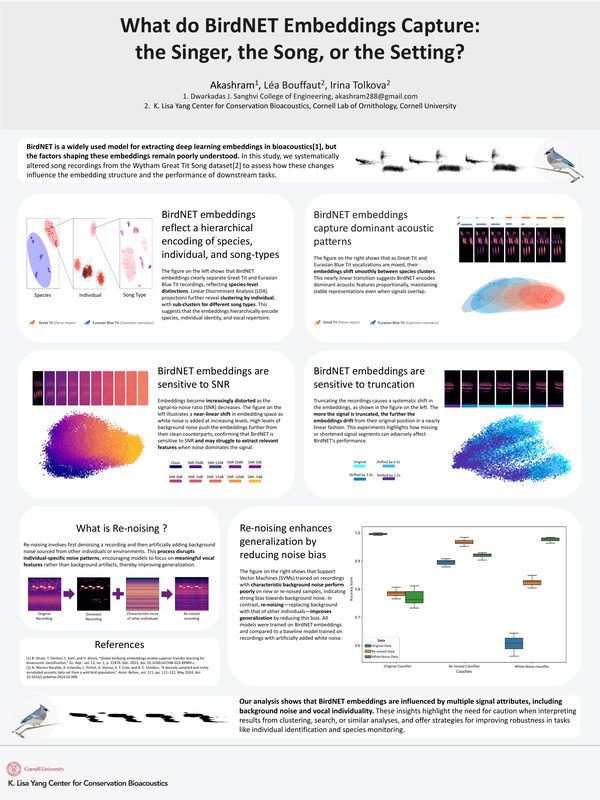
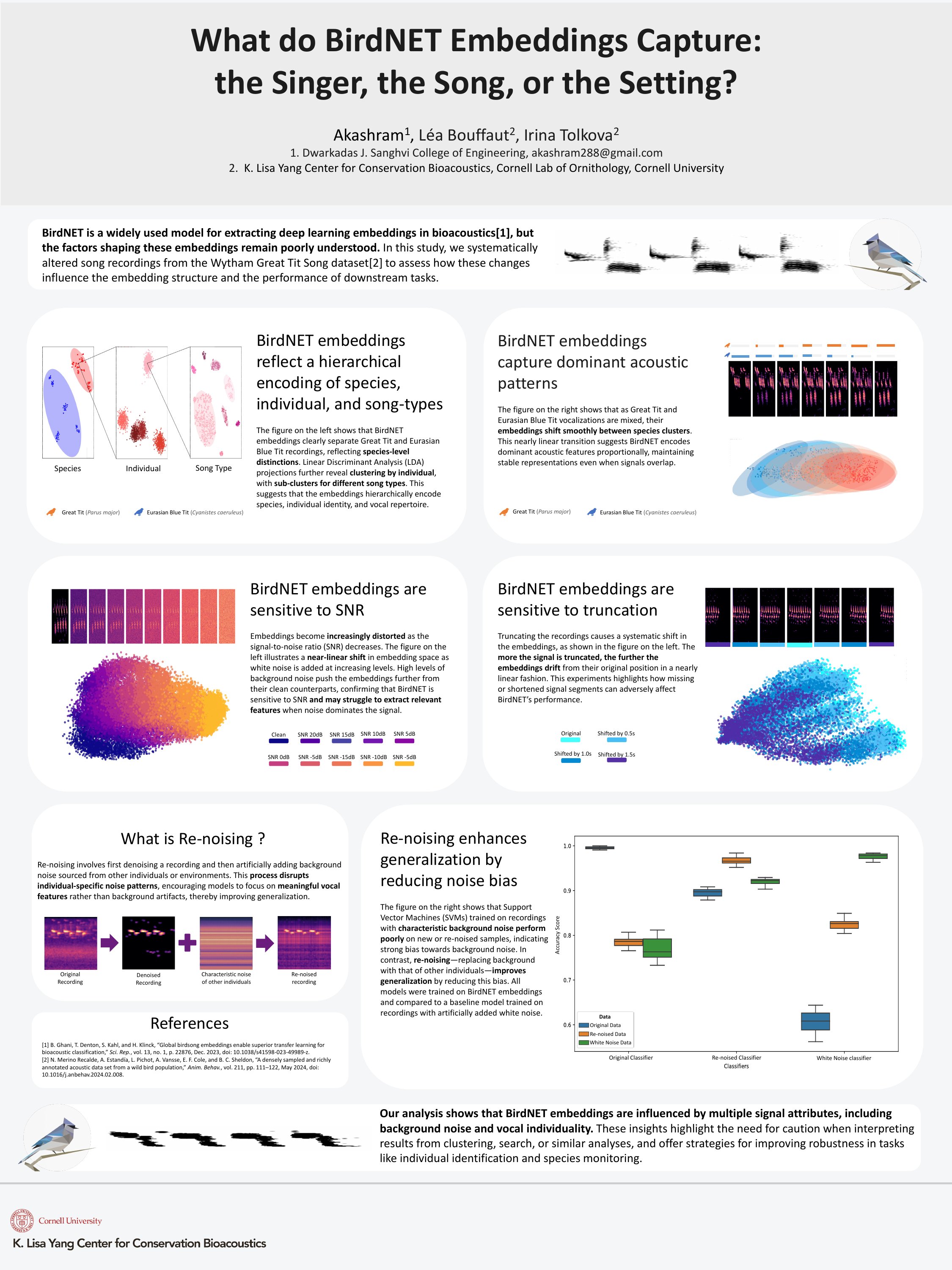
What do BirdNET embeddings capture: The singer, the song, or the setting?
Independent research focused on characterizing the effects of various parameters on BirdNET embeddings.
-
Lillian Wang
Cornell University, 2025
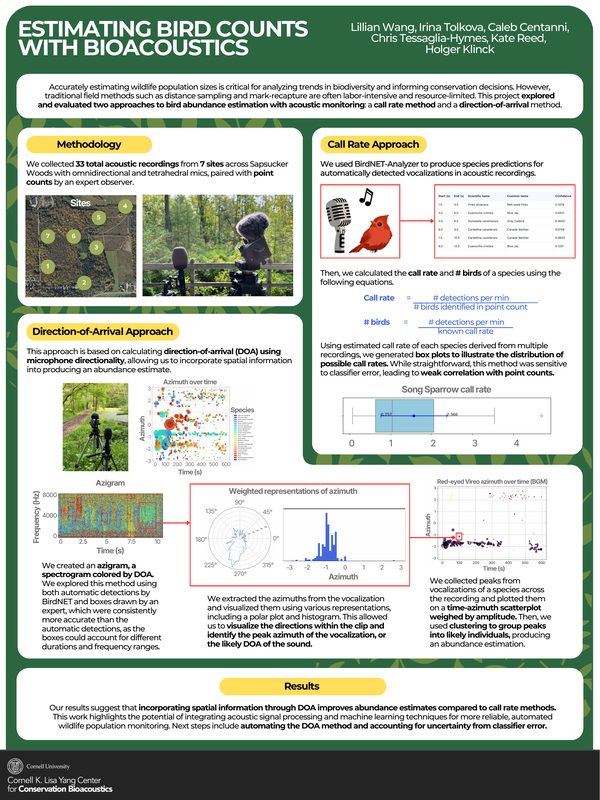
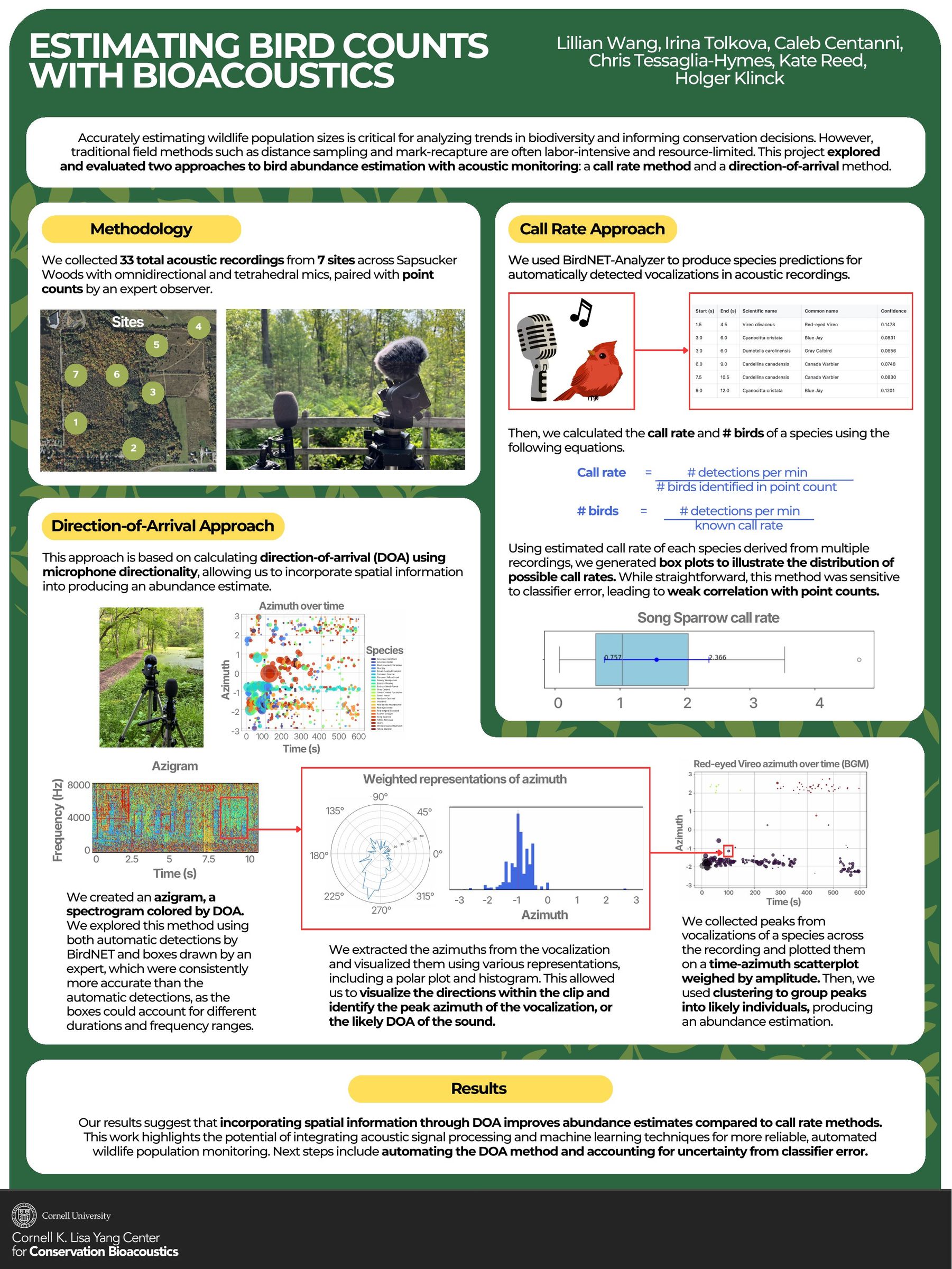
Estimating bird counts with bioacoustics
Funded 10-week summer research internship focused on exploring techniques for automated acoustic abundance estimation of birds in Sapsucker Woods.
-
Ivan Mokeyev
Cornell University, 2025
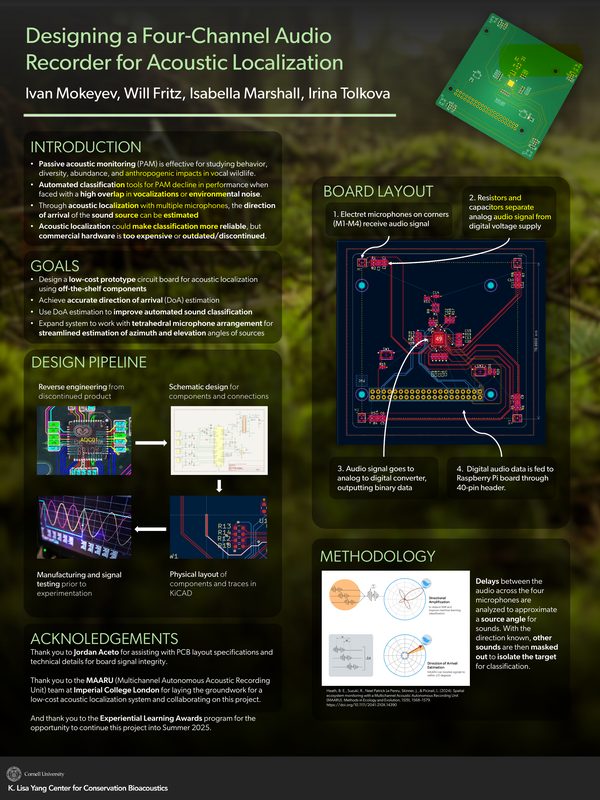
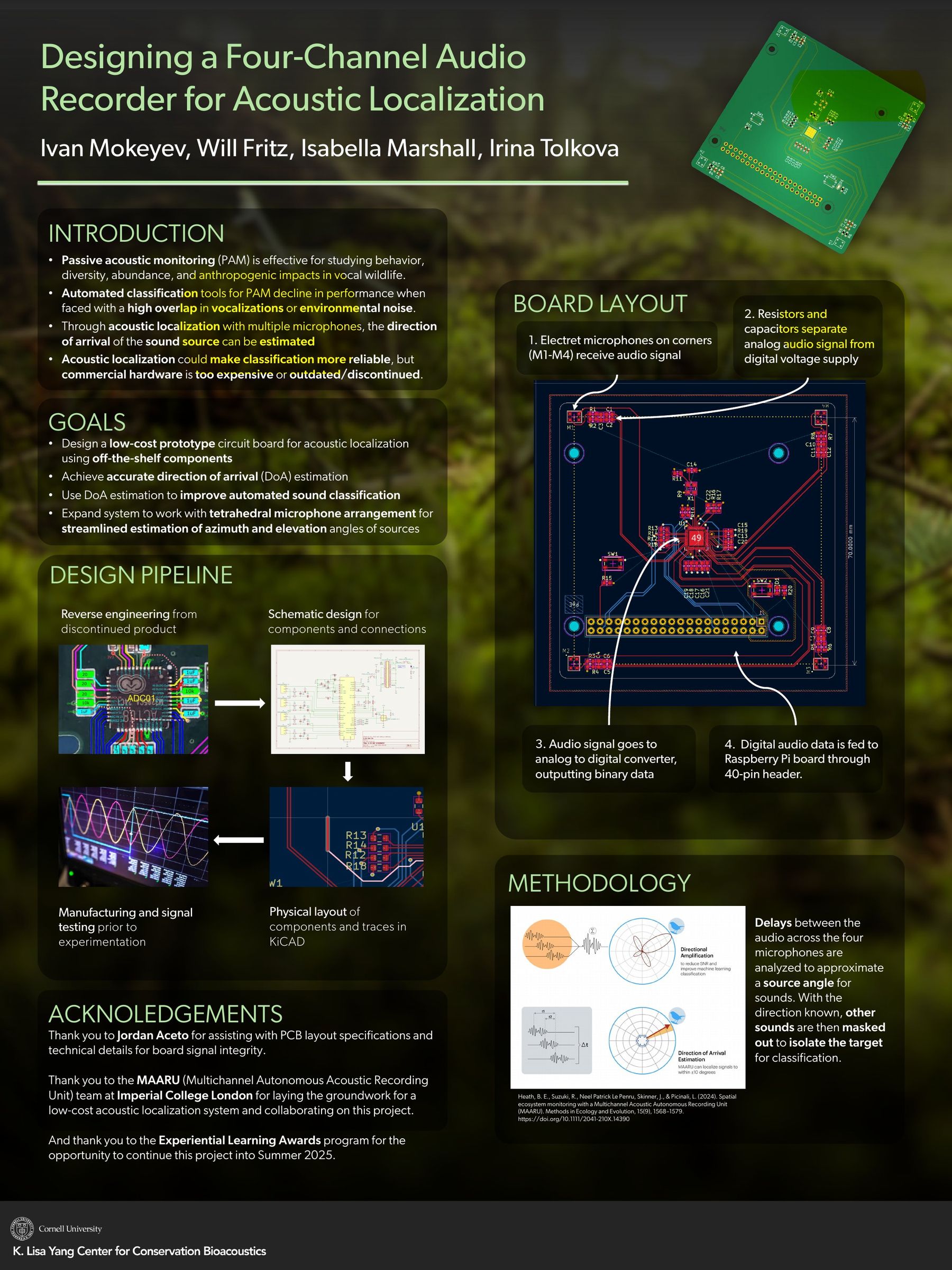
Designing a four-channel audio recorder for acoustic localization
Funded 10-week summer research internship focused on designing a board for multichannel audio recording, as well as computationally evaluating the efficacy of different designs for acoustic localization.
Other students
- 2024–2025
Enrico Breviglieri
São Paulo State University, Brazil
Supported in mentorship on machine learning for an undergraduate thesis on evaluating acoustic sexual dimorphism in Cerrado antbird species; published in the Journal of Ornithology (2026).
- 2024
Ambrose Blay
Cornell University
Funded 10-week summer research internship focused on evaluating acoustic localization with two tetrahedral microphones – including simulation, recording and analysis of natural soundscapes, and controlled playback experiments.
Mentoring programs
- 2023, 2026
Bioacoustics Equipment and Training program, Cornell K. Lisa Yang Center for Conservation Bioacoustics
Supported teams in the 2023 and 2026 cohorts of BEAT, a learning community for practitioners in Indonesia and Malaysia aiming to use bioacoustics for conservation projects.